April 17, 2024
When did you last think about those crowns in your mouth? For most people, after having crowns installed, they are soon forgotten about, being out of mind until another visit. However, there is often an issue under those crowns that may seem intact, especially if they have been around for more than a decade.
Dental crowns are remarkable restorations. Not only do they save damaged teeth, but they also enhance their functionality, while also providing a totally realistic appearance. But they don’t last forever; rather, most experts agree on an average period of 10 to 15 years. So why must crowns be replaced after some time?
The truth is, crowns don’t get old; instead, the problem lies at the crucial point where the crown intersects with your actual tooth.
The seam where your crown meets your natural tooth structure is called the margin. While very small, it is the most critical component of the entire crown repair process. However, over time, a variety of factors contribute to the weakening of this vital connection:
What makes crown decay especially difficult is the fact that it goes unnoticed. One can easily observe the progression of decay on exposed teeth, but it is impossible to detect decay underneath a crown. There may be cases when the X-ray will help, yet sometimes the signs are not visible.
By the time the patient starts experiencing such unpleasant signs as sensitivity, pain, and a loosened crown, the decay has taken place to such an extent that a replacement of the tooth has become necessary, since further restoration with a crown becomes impossible.
Consider the case of Michael, a patient who got a crown on his lower molar 13 years ago. On the external side, it all seemed fine, and there was nothing wrong with it. He did not feel any kind of pain or sensitivity and therefore concluded that everything was in order.
In one of our regular check-ups, we detected minor signs of discoloration near the margin of the crown. After carefully examining the margin of the crown using an explorer, we realized something was seriously wrong. As soon as we removed the crown, we were shocked to see that half of the tooth had already decayed.
Fortunately, we caught it in time. We managed to take out the decaying part of the tooth, built up the tooth structure once again, and gave him a new crown sealed properly. Otherwise, things would have been quite difficult for Michael if the crown had become loose or sensitive later on.
So how do you keep safe from anything hidden under your crowns? Let us give you some tips:
Think about these numbers: getting a new crown usually runs about $1,000-1,500. An implant for a tooth you had to remove? $4,000-5,000.
Taking care of yourself now is not only good for your teeth but can save you money in the long run.
Your dental crowns have served you well, but like all things, they have a lifespan. Being proactive about monitoring and replacing aging crowns isn’t an unnecessary expense – it’s an investment in preventing much more costly and invasive procedures down the road.
Proactive replacement isn’t just healthier for your mouth – it’s significantly friendlier to your wallet.
If it’s been over 10 years since your crown was placed, schedule a specific crown evaluation with your dentist. What’s hiding beneath might be nothing at all – or it might be a problem that’s much easier to address now than later.
Your future self (and wallet) will thank you.
You may notice sensitivity, pain, bad breath, or a loose crown, but often only a dentist can detect it early.
Yes, if caught early, the tooth can be cleaned and a new crown placed. Severe decay may require extraction.
Brush and floss well, clean around the margins, and visit your dentist regularly.
Yes, crowns over 10–15 years old can fail silently and should be checked regularly.
What Is Periodontal Disease? Signs, Causes & Treatment


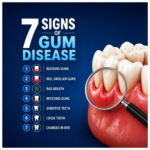
7 Early Signs of Gum Disease You Should Never Ignore