
November 13
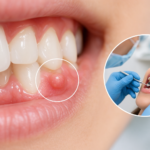
Finding a bump on your gum is one of those things that’s easy to notice and hard to ignore. Maybe it showed up near a tooth that’s been sensitive lately. Maybe it looks like a small pimple on the gum and doesn’t hurt at all, but there’s a strange taste in your mouth, and you’ve been checking it with your tongue ever since.
The cause is often something simple, like irritation or a canker sore. Sometimes it’s a sign of infection, such as an abscess, and that’s worth knowing early. Below, we’ll go through the common causes, how they tend to look and feel, and when it makes sense to schedule a dental appointment.
A bump on the gum is usually a dental abscess, a cyst, or a slight irritation such as a canker sore. If there’s a sore, swollen area near one tooth, particularly if the area has a foul taste or is accompanied by fever, this could indicate an infection and should be checked soon. A pimple on the gum that keeps returning, or a bump that doesn’t hurt but won’t go away, usually points to a draining infection that still needs a dentist’s attention.
| Cause | What it often looks and feels like | Pain | Urgency |
|---|---|---|---|
| Abscess | Red, swollen, pimple-like bump near one tooth; may leak pus | Often throbbing, but not always | See a dentist soon |
| Cyst | Smooth, round, slow-growing bump | Often painless at first | Get it checked |
| Canker sore or irritation | Shallow, tender spot, sometimes white or yellow | Mild to moderate | Usually clears in 1 to 2 weeks |
| Bony bump (torus) | Hard, painless ridge that doesn't move | None | Usually harmless, but have it confirmed |
| Fibroma (irritation bump) | Firm, smooth, pink bump, often where the gum is rubbed or bitten | Usually none | Have it examined; it may need removal |
| Mucocele | Soft, bluish, fluid-filled bump, more common on the lip or cheek but sometimes near the gum | Usually none | Get it checked if it keeps returning |
A dental abscess is a pocket filled with pus that forms due to the presence of bacteria. It may begin at the base of a tooth, usually following a deep cavity or crack, or from within the gum tissue (typically associated with gum disease).
Common gum abscess symptoms include:
One important thing to know is this: If an abscess drains and the pain subsides, the infection has not been cured. The infection has simply found a way to drain. It is usually a recurring condition until it is treated, since the source is within the tooth or gum.

Not all gum abscesses start in the same place, and the difference affects treatment:
Periodontal abscess: forms in the gum pocket beside a tooth, usually in someone with gum disease. The gum may look swollen and shiny, the tooth may feel loose, and the area can be tender to touch. Treatment often involves draining the abscess and deep cleaning below the gumline.
Periapical abscess: starts inside the tooth, often after deep decay, a crack, or a damaged nerve, and spreads out from the root tip. The tooth may be sensitive to hot, cold, or biting. Treatment often involves a root canal or, if the tooth can’t be saved, extraction.
Only an exam and X-rays can tell these apart, which is one more reason not to guess at home.
A bump above a single tooth often points to that tooth. When bacteria collect at the root, the infection may push through the bone and drain onto the gum, forming a small bump. Dentists sometimes call this a parulis. It may look white, yellow, or red, and some have a small visible “head.”
A bump that is near one tooth is more likely to be tooth-related than one that spreads across several areas of the gum. It’s also possible for this kind of bump to feel fine. When pus drains, pressure drops and the pain may fade, so a painless bump doesn’t mean you can skip the exam.
It seems backwards, but a painless bump on the gum can still be an infection. Pain from an abscess usually comes from pressure building up inside the bone and tissue. When the infection finds a path out and drains through the gum, that pressure drops, and the pain can disappear almost completely.
Some infections also develop slowly, so the body adapts and you notice little discomfort. The bump may shrink, then swell again, and the bad taste may come and go. That on-and-off pattern is a sign the source of the infection is still there.
A painless bump on the gum can also be a cyst, fibroma, or bony growth, which is why it’s worth getting looked at even when it feels fine.
No. It’s tempting, but popping or squeezing a pimple on the gum can push bacteria deeper into the tissue and bone and make the infection worse. It also won’t fix the cause, so the bump will likely return. If it bursts on its own, rinse gently with warm salt water and call your dentist.
A bad taste from a gum bump is one of the most common signs of a draining infection. If the bump leaves a salty, bitter, or foul taste, it’s often because pus is draining into your mouth. You may notice bad breath along with it, and the taste may be strongest when you press on the area or first thing in the morning.
This is a useful clue for your dentist, so mention it at your visit. It’s also common, and it doesn’t mean you did anything wrong.
Not every gum bump is an infection. A few other possibilities:
Cyst: a fluid-filled sac that grows slowly. Many are painless until they get large enough to notice.
Canker sore or irritation: a sore spot from a sharp food, a rough filling edge, or biting the gum. These usually heal on their own within a couple of weeks.
Torus: a hard bump of bone that has often been there for years. It’s usually harmless.
Fibroma: a firm, smooth overgrowth of tissue caused by long-term irritation, such as a rough tooth edge or ill-fitting denture.
Mucocele: a soft, fluid-filled bump caused by a blocked or injured salivary gland.
A bump that is hard, keeps growing, or hasn’t healed after about two weeks should be examined, even if it doesn’t hurt. While most gum bumps are harmless or treatable, a persistent white or red patch, a non-healing sore, or a hard lump that keeps growing can occasionally be an early sign of something more serious, including oral cancer. Early evaluation matters. A dentist can rule out less common conditions and tell you what you’re dealing with.
Usually not. The swelling may go down, and the pain may ease for a while, but the infection tends to remain. It can invade surrounding tissue or the jaw without treatment.
While you wait for an appointment, a few things can help, and a few can make things worse:
Rinse your mouth gently with warm salt water to maintain a clean and comfortable area.
Avoid popping or squeezing the bump. This can drive bacteria further in.
Do not rely on pain medication or leftover antibiotics to treat the infection. They might just cover up symptoms, rather than solve the underlying problem.
It’s common to wonder if a course of antibiotics will clear up a gum bump. Antibiotics can help control bacteria that are spreading, and your dentist may prescribe them in some cases. But on their own, they usually don’t solve the problem.
The reason is the source. An abscess forms around an infected tooth nerve, a deep gum pocket, or trapped debris- areas where the blood supply is limited, and medication doesn’t reach well. Until the source is treated by draining the abscess, cleaning the gum pocket, or performing a root canal, the bacteria can return once the antibiotics stop.
Taking leftover or unprescribed antibiotics can also hide symptoms, delay care, and contribute to antibiotic resistance. If you’ve already started a course and the bump has shrunk, you still need an exam.
If you have a bump near a tooth, one that has been present for more than a week or two, or if the bump is recurring, schedule a dental appointment soon. This includes a painless bump, since a lack of pain doesn’t rule out infection.
Seek urgent medical care if your face and/or neck are swollen, your fever is high, or you have trouble swallowing or breathing, and the pain is increasing quickly. These are indications that the infection is spreading.
Noticing a bump on your gum and living in or near Allen, TX? Our team can help you find out what’s causing it. Schedule an appointment, or call us if you need emergency dental care.
The visit typically begins with an inspection of the area, some questions regarding the symptoms, and a reference to digital X-rays to identify the origin of the problem. Sometimes the dentist will also test the tooth to see how healthy the nerve is.
Treatment will depend on the cause. Treatment may include draining the infection, deep cleaning for gum-related abscesses, or a root canal to remove the infection and save the tooth. In some cases, if the tooth is too damaged, a tooth extraction may be recommended. If the infection started inside the tooth, at All Smiles Dentistry, we may suggest root canal treatment in Allen, TX, so you can keep your natural tooth.
Most gum bumps turn out to be very treatable, especially when they’re caught early. If yours has been there for more than a week or two, or it’s coming with pain, swelling, or a bad taste, a quick exam can tell you what’s going on.
Not always. A small bump without fever or facial swelling is usually not an emergency, but it should still be checked within a week or two, even if it doesn’t hurt. Facial swelling, fever, or trouble breathing or swallowing needs urgent care.
It’s unlikely. Symptoms may ease if the abscess drains, but the infection often remains and needs treatment from a dentist.
A salty or foul taste often means pus is draining from an infection. It’s worth mentioning to your dentist.
Often not at first. Many cysts are painless until they grow large, which is why a new bump is worth checking even if it feels fine.
It can be. A painless bump may be a draining infection, a cyst, or another growth. Because pain isn’t a reliable sign, have any bump that lasts more than a week or two examined.
What Is This Bump on My Gum? Abscess, Cyst, or Something Else?


When Should You See a Dentist for Pericoronitis? Warning Signs to Know

4 Common Denture Problems and How to Fix Them

Why Is My Tooth Turning Dark All of a Sudden?

What’s Hiding Under Your Old Fillings?
| M | T | W | T | F | S | S |
|---|---|---|---|---|---|---|
| 1 | ||||||
| 2 | 3 | 4 | 5 | 6 | 7 | 8 |
| 9 | 10 | 11 | 12 | 13 | 14 | 15 |
| 16 | 17 | 18 | 19 | 20 | 21 | 22 |
| 23 | 24 | 25 | 26 | 27 | 28 | 29 |
| 30 | ||||||