

March 09, 2026
Have you lost a tooth recently? But now, escape smiling fully in the crowd due to the unusual gap in your teeth. It’s normal to feel embarrassed and lose confidence when dealing with a lost tooth.
Fortunately, with the advancement of dental treatment, you can get back your lost smile with dental implants. Instead of adjusting dentures and traditional bridges, the dental implant offers you longer-term benefits.
However, it’s not as easy or simple as it looks. Many times, the dentist suggests you go through the dental bone graft procedure before the implant. For some patients, it’s a new term, and they think, “Is it really necessary, or can it be avoided?”
Generally, individuals who want to save money and need a dental implant quickly avoid the dentist’s crucial advice. However, avoiding the essential bone graft for implants can lead to implant failure. That’s the reason you need to know all about why it is necessary in some cases and why you should not ignore it.
Let’s learn everything in detail.
If you have adequate jawbone support, the dentist will never advise you about a dental bone graft. It is recommended only once your jawbone is sufficiently strong to support a dental implant. Here are a few reasons you need strong jawbone support for a better implant:
For this reason, dentists in Allen, Texas, endorse dental implants when the jawbone is not adequate to support an implant.
The majority of people lose their jawbone due to untreated lost teeth for a long time. It is all due to the need for stimulation to maintain jawbone density. But when stimulation is gone, the body starts to absorb the unused bone. Here are some common reasons for jawbone loss.
If you find yourself with a noticeable facial structure or changing alignment in teeth, don’t ignore that. These are a few signs of a weak jawbone. Take it seriously and consult with your dentist.
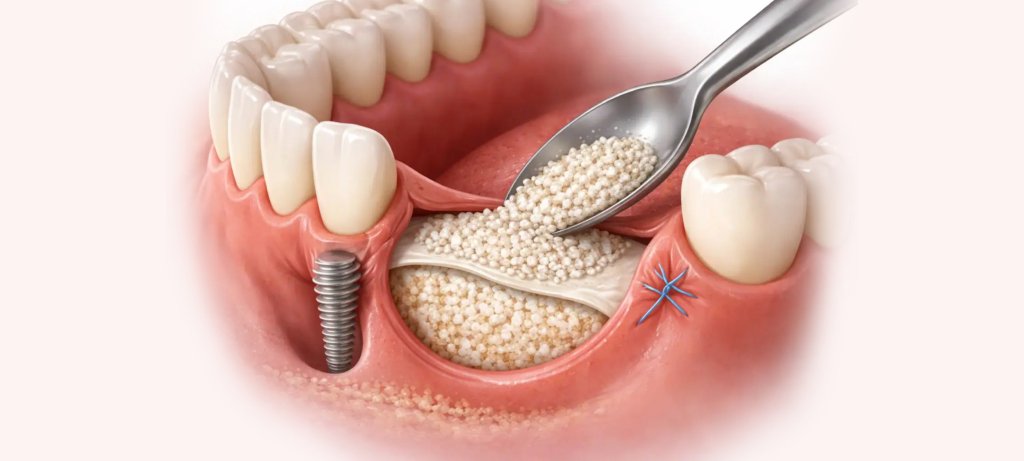
Now, if the dentist suggests bone grafting before the implant, don’t be scared. The bone graft for implants is a common surgical procedure in which bone-like material is transplanted to the jaw. It helps to rebuild the lost bone density. This is essential for creating a strong base for a dental implant tooth, especially when someone’s jawbone is weak or there is not enough jawbone.
It holds space in your jaw and allows the body to do repair work. This aids in the growth and regeneration of one’s own bone tissue and functions similarly to a scaffold.
As per your jawbone condition, the expert dentist will recommend the right material to you.
The dental bone graft procedure typically takes around 45 to 90 minutes. Here are the well-known steps performed by the dentist:
That’s it. The stitches dissolve over time, and it takes around 2 to 4 weeks to heal from the surgery. Healing time depends on the oral health and size of the graft. During this period, graft material gradually integrates with the natural bone and offers a strong foundation for implants. In some cases, dentists implant at the same time, but in most cases, patients need to wait until the area fully heals.
Not every dental implant needs to go through dental bone grafting. Those who have a strong jawbone and enough to support an implant have no need for bone grafting for the implant.
Have a look at some cases when a dentist will not advise you on bone grafting before an implant.
Dentists use 3D X-ray scans called CBCT scans to analyze the condition of your jawbone. After that, they determine whether a bone graft is necessary in your case or not.
No doubt, the dental bone grafting before implant seems a little daunting to many patients. Most of us like to avoid it due to extra time and cost, but this process is needed for long-term implant success. This is essential for those who are dealing with a weak jawbone or not enough jawbone to hold an implant. It brings a strong foundation to dental implants and improves stability.
Now, if you want the best and longest-lasting dental implant, then always consider the professional who understands your condition better and brings a better solution to you.
The procedure is usually not painful because it is done under local anesthesia. Mild discomfort after the surgery is normal.
You should eat soft foods for a few days and avoid chewing on the treated area until it begins to heal.
No. A bone graft is only needed when there is insufficient jawbone to support the implant.
Patients with healthy and sufficient jawbone density can receive dental implants without a bone graft.
Dental bone grafts have a high success rate and help ensure that dental implants remain stable and long-lasting.
When Should You See a Dentist for Pericoronitis? Warning Signs to Know

4 Common Denture Problems and How to Fix Them

Why Is My Tooth Turning Dark All of a Sudden?

What’s Hiding Under Your Old Fillings?

What Is Periodontal Disease? Signs, Causes & Treatment

| M | T | W | T | F | S | S |
|---|---|---|---|---|---|---|
| 1 | 2 | 3 | 4 | |||
| 5 | 6 | 7 | 8 | 9 | 10 | 11 |
| 12 | 13 | 14 | 15 | 16 | 17 | 18 |
| 19 | 20 | 21 | 22 | 23 | 24 | 25 |
| 26 | 27 | 28 | 29 | 30 | 31 | |