April 30, 2023
Going to the dentist for a deep cleaning can feel intimidating for many patients, especially when it is their first time. However, this procedure is an important step in maintaining healthy teeth and gums.
A deep dental cleaning, also known as scaling and root planing, goes beyond a regular cleaning by removing plaque and tartar buildup below the gumline. It helps prevent and treat gum disease, improve breath, and support overall oral health.
In this blog, we will explain what to expect during the procedure of dental cleaning in Allen, its benefits, recovery tips, and how it can protect your smile for the long term.
Deep dental cleaning or periodontal cleaning is another term for scaling and root planning. This teeth cleaning process involves more than just cleaning the teeth and gums in a standard fashion. Your dentist or dental hygienist uses various instruments in this procedure, which are used to remove the accumulation of plaque and tartar from your teeth.
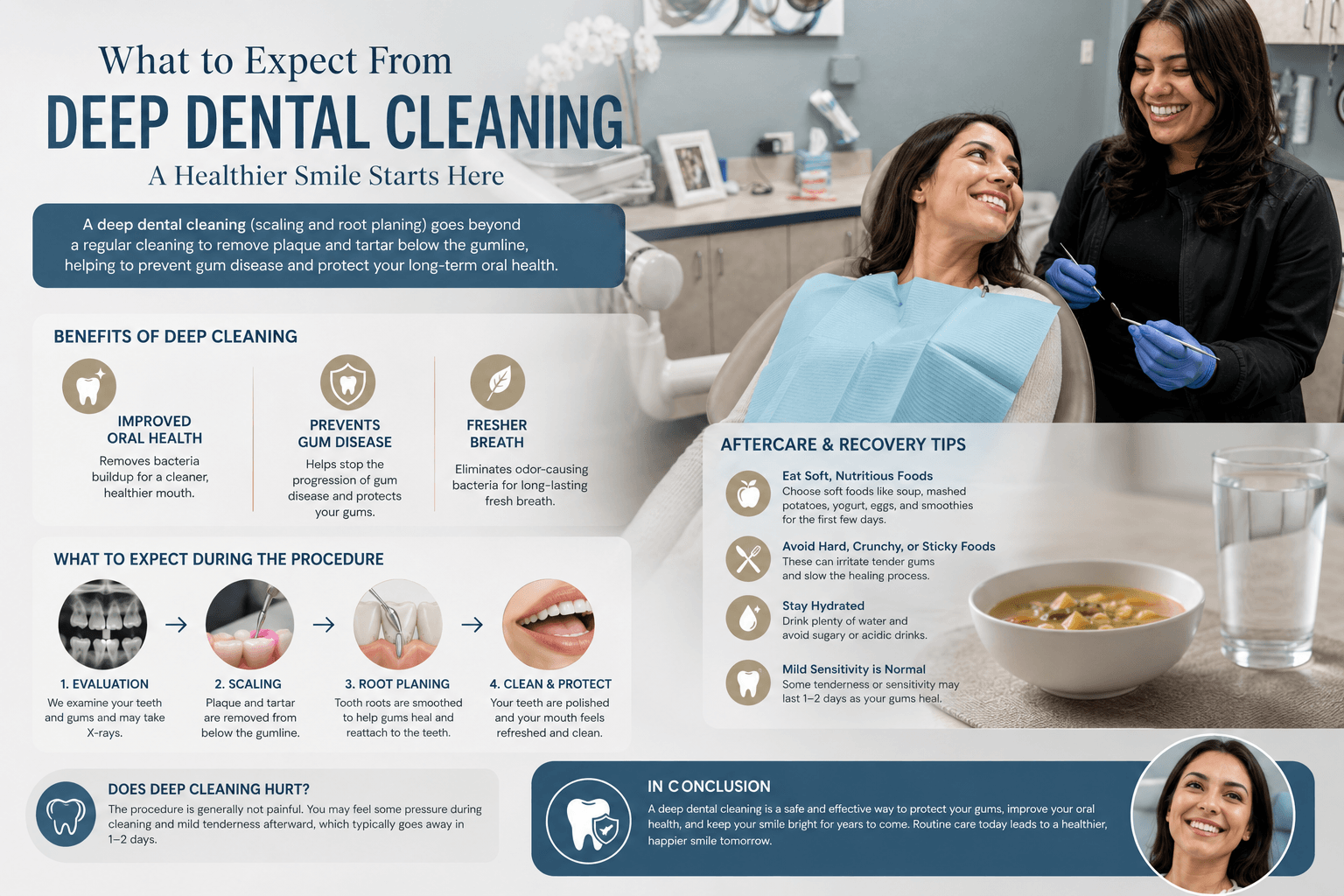
Here are some of the advantages of undergoing a dental cleaning in Allen:
After undergoing deep dental cleaning treatment, it’s essential to take care of your teeth by consuming healthy food choices, such as vegetables or protein-rich foods with low sugar content. Avoid hard foods, which can damage your already tender gums; instead, opt for soft foods like soup or mashed potatoes for the first few days post-treatment.
Deep teeth cleaning is a process that is not painful, but during the cleaning process, you may experience some pain due to the pressure applied when removing calculus deposits on sensitive areas. Some people will be experiencing pain after treatment lasting for only one or two days, while their gum tissues heal.
A deep dental cleaning is a necessary procedure that helps maintain and improve your oral health. The benefits of the procedure, such as fresher breath, better oral hygiene, and prevention of gum disease, extend beyond just health. The process is not painful, and with a bit of care post-treatment, you can feel great about your smile knowing you’re taking good care of your teeth and gums.
Deep cleaning of the teeth involves scaling and root planing, which removes the plaque and tartar underneath the gumline to address the gum disease, ensure gum health, and prevent future bacterial infection.
Gum cleaning may be advised for patients who have indications of gum disease, such as bleeding gums, halitosis, receding gums, or deep pockets, thus preventing further infection and promoting healthy gums.
Deep cleaning is usually painless since local anaesthesia can be used. You may experience mild pressure and sensitivity during the procedure and some discomfort in the following one to two days.
The recovery period following deep cleaning takes one or two days. It’s normal to experience some degree of gum sensitivity or tenderness, which usually resolves within a day or two.
Eat soft foods such as yoghurts, soups, mashed potatoes, and smoothies after deep cleaning. Refrain from hard, spicy, or crunchy foods to allow your gums time to heal.
When Should You See a Dentist for Pericoronitis? Warning Signs to Know

4 Common Denture Problems and How to Fix Them

Why Is My Tooth Turning Dark All of a Sudden?

What’s Hiding Under Your Old Fillings?
What Is Periodontal Disease? Signs, Causes & Treatment

| M | T | W | T | F | S | S |
|---|---|---|---|---|---|---|
| 1 | 2 | 3 | 4 | |||
| 5 | 6 | 7 | 8 | 9 | 10 | 11 |
| 12 | 13 | 14 | 15 | 16 | 17 | 18 |
| 19 | 20 | 21 | 22 | 23 | 24 | 25 |
| 26 | 27 | 28 | 29 | 30 | 31 | |